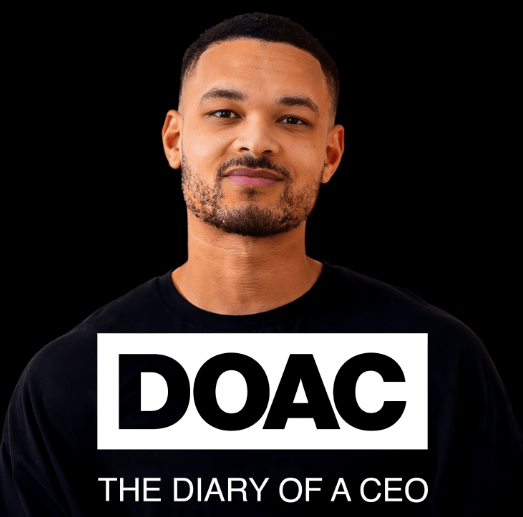
What happens when you do not quite fit in, struggle to find your direction and decide to take a chance on yourself? For Steven Bartlett, it became the beginning of an extraordinary journey.
Today, Steven Bartlett is a successful entrepreneur, investor, author and the host of The Diary of a CEO, one of the world’s most recognised podcasts. He has interviewed some of the most influential people across business, sport, entertainment, science and personal development.
His story did not begin with success, money or opportunity. It began with challenges, uncertainty and a young man who was determined to create something different. Steven’s journey is a reminder that success does not always follow a traditional path. Sometimes, the biggest opportunities come when we are prepared to take a risk, challenge expectations and believe in ourselves.
“Stop telling yourself you’re not qualified, good enough or worthy. Growth happens when you start doing the things you’re not qualified to do.”
Early life: Growing up with Challenges
Steven Bartlett was born in Botswana in 1992 to a Nigerian mother and an English father. His family later moved to Plymouth, England, where he grew up. His childhood was not without difficulties. He has spoken about financial struggles, feeling different from others and experiencing challenges at school. He also struggled with confidence and finding his place.
His relationship with education was not straightforward. Rather than following the conventional route of completing university and finding a secure job, Steven began questioning whether the traditional pathway was right for him. At just 18, he enrolled at Manchester Metropolitan University to study business management. However, after attending just one lecture, he decided to leave. Some people, dropping out of university might have felt like a failure, for Steven, it was the decision to pursue an idea he believed in.
Steven did not have a guaranteed plan or a clear roadmap. What he did have was curiosity, ambition and a willingness to try.
Taking a risk: The beginning of an Entrepreneurial Journey
Steven’s first business venture was called Wallpark, an online platform designed to help university students connect, advertise events and buy and sell second-hand textbooks. It was a relatively simple idea, but it demonstrated something important; recognising a problem and finding a way to solve it. He continued exploring opportunities in the growing world of social media and digital marketing.
In 2014, at just 21 years old, Steven co-founded Social Chain with business partner Dominic McGregor.
The business focused on social media marketing, helping brands connect with audiences through online communities and digital content. At a time when many businesses were still trying to understand the power of social media, Steven recognised its potential.
Social Chain grew into an international business, eventually becoming part of a publicly listed company. Steven later stepped down as co-CEO in 2020 to pursue new opportunities. His early business journey demonstrated that you do not necessarily need to follow a traditional career path to build something meaningful. Sometimes, recognising an opportunity and having the courage to act on it can open unexpected doors.
The Diary of a CEO: Turning Conversations into a Global Platform
In 2017, Steven started a podcast called The Diary of a CEO. The podcast was not initially designed to become a global success. It began as an experiment and a way for Steven to document his thoughts, experiences and conversations. The concept gradually evolved. Rather than simply interviewing successful people about their achievements, Steven wanted to explore the person behind the success. What had they struggled with? What mistakes had they made? What fears had they overcome? What had life taught them? The conversations became more personal, exploring topics such as failure, relationships, mental health, leadership, confidence, resilience and personal growth.
In 2020, Steven expanded the podcast onto YouTube, helping it reach a much wider audience. Its appeal came from the opportunity to hear honest conversations with people from different walks of life. Guests were encouraged to discuss not only their successes but also the experiences and challenges that shaped them. The podcast continued to grow, reaching one billion streams across major platforms in 2024 and more than 20 million YouTube subscribers by 2026. What began as a personal experiment had developed into an international media platform.
“Stories are the single most powerful weapon any leader can arm themselves with – they are the currency of humanity.”
What Made Steven Bartlett Successful?
There is no single formula for success, but several qualities stand out in Steven’s journey.
1. He was not afraid to take a different path.
Steven chose not to follow the traditional university-to-career pathway. He recognised that his interests and ambitions lay elsewhere.
Taking a different direction can be uncomfortable, particularly when other people do not understand your decisions. However, his story demonstrates that there is more than one way to build a successful career.
2. He turned curiosity into opportunity.
Steven has consistently shown an interest in understanding people, businesses and emerging trends. He recognised the potential of social media before many businesses understood how powerful it could become. Later, he recognised the value of long-form conversations and the growing appetite for authentic discussions. Curiosity encouraged him to explore opportunities rather than simply accept things as they were.
3. He was prepared to learn along the way.
Success rarely comes with all the answers. Steven’s journey involved experimenting, making decisions, learning from experiences and adapting to change. His story reminds us that we do not need to know everything before taking the first step. We can develop our skills and confidence as we go.
4. He understood the importance of storytelling.
One of the strengths of The Diary of a CEO is its focus on people’s stories. People connect with experiences they can relate to. Hearing someone talk about rejection, disappointment, uncertainty or starting again can help others feel less alone. By creating a platform for these conversations, Steven built something that went beyond traditional business interviews.
5. He kept evolving.
Steven did not stop after building Social Chain. He explored podcasting, publishing, investing, media production and mentoring entrepreneurs. His willingness to explore new opportunities has been an important part of his professional development.
Lessons We Can Take From His Journey
Steven Bartlett’s story is not just about becoming a successful businessman or building a popular podcast. It offers some valuable reminders about how we approach our own lives.
- Your starting point does not define your destination. Where you begin in life does not have to determine where you end up.
- You do not need everyone’s approval. Sometimes, following your own direction means making decisions others may not understand.
- Failure and uncertainty are part of growth. Not every idea will work, and not every decision will be right. What matters is what you learn.
- Start before you feel completely ready. Waiting until you have everything figured out can mean missing opportunities.
- Keep investing in yourself. Learning, developing new skills and remaining curious can create opportunities you may not have imagined.
- Success is not one-size-fits-all. Your version of success might look completely different from someone else’s.
One of the most interesting aspects of Steven Bartlett’s journey is that he did not wait for the perfect circumstances to begin. He started with an idea, explored possibilities and learned as he went. Personal growth does not have an age limit.
Steven Bartlett’s journey reminds us that success can come from unexpected beginnings. It is not always about having the perfect education, the right connections or a clear plan. Sometimes, it starts with an idea, a little courage and the willingness to believe that something more is possible.
A question worth asking yourself is:
If you stopped worrying about what other people might think, what is one thing you would give yourself permission to try?
You do not have to change your entire life tomorrow. You simply must be willing to take the first step.
Do not underestimate what you can achieve when you give yourself permission to begin.
“Stop telling yourself you’re not qualified, good enough or worthy. Growth happens when you start doing the things you’re not qualified to do.” Steven Bartlett


Leave a Reply