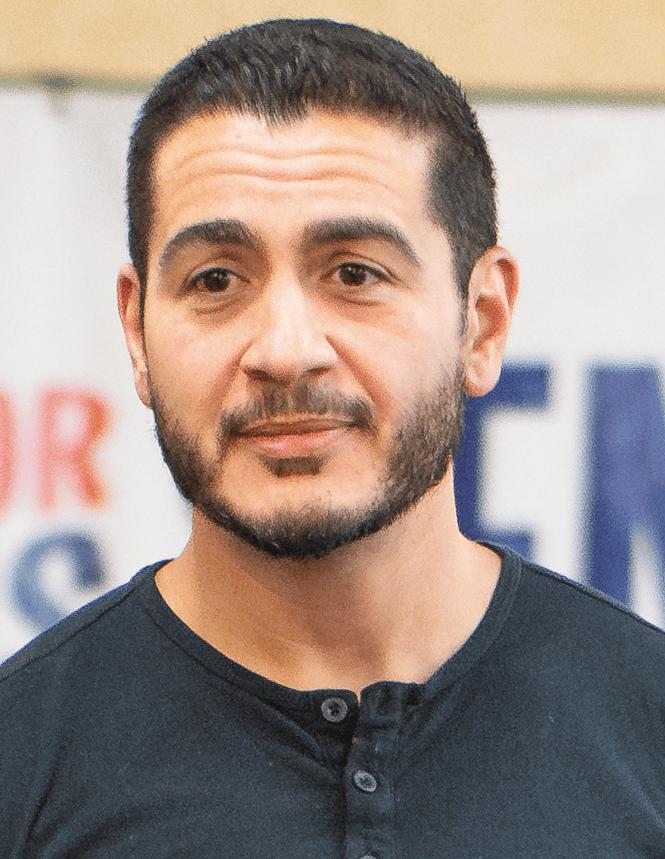
Abdul El-Sayed overcame obstacles, challenging the establishment and proving that determination and conviction can turn an ambitious vision into reality. Success rarely follows a straight path. Sometimes it takes years of education, personal sacrifice, setbacks and the courage to challenge expectations before an opportunity finally arrives. The story of Abdul El-Sayed is one of perseverance, resilience and refusing to give up on a bigger vision.
In November 2026, El-Sayed made American political history when he defeated Republican Mike Rogers in Michigan’s US Senate election. He became the first Muslim ever elected to the United States Senate. His journey to this achievement was not an overnight success. It was shaped by his family’s immigrant experience, an impressive academic journey, an unsuccessful political campaign and the determination to challenge an established political system. His story offers an important reminder, a setback does not have to be the end of your story. Sometimes it is simply another chapter in the journey.
Childhood and family: Growing up with different influences
Abdulrahman Mohamed El-Sayed was born on 31 October 1984 in Rochester Hills, Michigan, to Egyptian immigrant parents. His father, Mohamed El-Sayed, moved from Egypt to the United States to pursue further education. An engineer and academic, his father had left Egypt amid political repression and concerns about his political activism. His parents separated when Abdul was young. His father subsequently raised him in Michigan, alongside his stepmother, Jacqueline, while his biological mother lived in Missouri. Growing up in a family with Egyptian heritage and American influences gave him an appreciation of different cultures and perspectives.
Important influences from El-Sayed’s childhood include:
- Education: His father’s academic background helped establish the importance of learning and intellectual curiosity.
- Cultural identity: Growing up with Egyptian heritage in America gave him an understanding of navigating different cultural environments.
- Community: His experiences helped shape his interest in people, society and the challenges affecting communities.
- Ambition: He developed an interest in leadership, public service and making a meaningful contribution.
Rather than allowing his background to define the limits of what he could achieve, he used his experiences as part of the foundation for his ambitions.
Education: Turning ambition into opportunity
El-Sayed’s impressive academic achievements were the result of commitment, discipline and taking advantage of opportunities. He attended Bloomfield Hills High School in Michigan, where he was not only academically capable but also actively involved in sport. He captained the school’s lacrosse, wrestling and football teams, demonstrating an early interest in teamwork, leadership and competition. His education continued at the University of Michigan, where he studied biology and political science.
His achievements included:
- Graduating in 2007 with highest distinction.
- Delivering the commencement speech to his graduating class.
- Receiving a full-tuition scholarship to the University of Michigan Medical School.
- Winning a prestigious Rhodes Scholarship in 2009.
- Completing a doctorate in public health at the University of Oxford in 2011.
- Completing his medical degree at Columbia University in 2014.
The combination of medicine, public health and political science gave him a distinctive perspective.
He began to understand that improving people’s lives was not just about treating illness. It was also about addressing the social, economic and environmental conditions that influence people’s health.
An important lesson from his education: never underestimate the power of learning. Education can open doors, but it can also change the way you see the world and the contribution you believe you can make.
Finding his purpose: Moving from medicine into public service
After completing his studies, El-Sayed began building a career in public health and academia. He became an assistant professor at Columbia University and later returned to Michigan, where he took on the role of Executive Director of the Detroit Health Department. This was an important turning point. Detroit faced significant public health challenges, including poverty, unequal access to healthcare and the consequences of long-term economic disadvantage. Rather than concentrating solely on individual medical treatment, El-Sayed became interested in tackling the wider issues affecting people’s wellbeing.
His work focused on areas such as:
- Improving access to healthcare
- Addressing health inequalities
- Tackling preventable illnesses
- Improving public health services
- Supporting healthier communities
His experience reinforced an important belief: where you live, your financial circumstances and your access to essential services can have a significant impact on your health and opportunities. It also provided him with practical experience of how government decisions affect everyday people.
The setback: Losing his first major election
In 2018, El-Sayed decided to take his commitment to public service into politics. At just 33 years old, he entered the Michigan gubernatorial race, hoping to become the state’s first Muslim governor. His campaign focused on progressive ideas, including:
- Universal healthcare
- Improving education
- Reducing economic inequality
- Addressing environmental concerns
- Making government more accountable
However, his campaign faced considerable challenges. He had never held elected office and was competing against better-established political figures. Ultimately, he lost the Democratic primary to Gretchen Whitmer, who went on to become Michigan’s governor. For many people, losing such a significant election could have been a reason to abandon their political ambitions but El-Sayed did not allow the result to define his future. Instead, he continued his work in public health, remained involved in political discussion and developed his ideas about how the political system could better serve ordinary people.
Facing adversity: Challenging the political establishment
One of the defining features of El-Sayed’s political journey has been his willingness to challenge established ways of thinking. In 2025, he entered the race for the US Senate seat in Michigan. This time he had more experience, a clearer political identity and a stronger understanding of the issues he wanted to address.
His campaign centred on three major themes:
- Getting money out of politics: Reducing the influence of wealthy donors and special interest groups.
- Putting money in people’s pockets: Addressing the cost of living and financial pressures facing ordinary families.
- Healthcare for everyone: Advocating for Medicare for all, a system designed to provide universal healthcare coverage.
However, his campaign faced some obstacles.
- Being the Underdog
El-Sayed was competing against established political figures, and did not have the same financial resources or political connections as his opponents. His campaign faced a significant funding disadvantage, with outside groups spending heavily to oppose him. Rather than abandoning his message, he concentrated on building grassroots support and connecting directly with voters. He used community events, public appearances and social media to communicate his ideas and encourage ordinary people to become involved.
2. Facing criticism and personal attacks
As a Muslim American of Egyptian heritage, El-Sayed also faced scrutiny and attacks relating to his religion and background. During the election campaign, political opponents made inflammatory claims about his faith and questioned his loyalty to America. These attacks highlighted the additional challenges that candidates from minority backgrounds can face when entering public life. Rather than allowing the controversy to completely derail his campaign, he continued to focus on healthcare, economic pressures and the need for political reform.
3. Overcoming financial disadvantages
One of the most remarkable aspects of his 2026 Democratic primary campaign was the difference in financial resources between the candidates. His opponent Haley Stevens benefited from substantial outside spending, including advertising support from groups aligned with AIPAC (The American Israel Public Affairs Committee is a United States lobbying group that advocates for policies strengthening relations between the U.S. and Israel). Despite being significantly outspent, El-Sayed managed to secure victory by approximately one percentage point.
4. The breakthrough: Making history in the 2026 election
On 3 November 2026, El-Sayed achieved the political breakthrough he had been working towards. He defeated Republican candidate Mike Rogers in Michigan’s US Senate election. His victory was historic because he became the first Muslim ever elected to the United States Senate. It was a significant achievement, not only for El-Sayed personally but also for representation and diversity in American politics.
His success was particularly noteworthy because:
- He had previously lost a major gubernatorial election.
- He had entered the Senate race without the backing of the traditional political establishment.
- He had overcome a substantial financial disadvantage in the Democratic primary.
- He faced considerable criticism and attacks relating to his identity and political positions.
- He successfully brought together enough voters to win a competitive statewide election.
His journey from a relatively unknown public health official to a United States senator illustrates what can happen when someone remains committed to their goals despite setbacks. His victory also reflected broader voter dissatisfaction with aspects of established politics and support for his progressive policy platform.
5. The power of persistence: what we can learn from Abdul El-Sayed
El-Sayed’s journey offers valuable life lessons, reminding us of the power of resilience, determination and staying true to our values.
1. Your beginnings do not determine your destination.
Coming from an immigrant family and growing up in a multicultural environment did not limit his ambitions. He used his background and experiences to develop his understanding of the world.
2. Education can create opportunities.
His academic journey demonstrates the importance of curiosity, discipline and continually developing your knowledge and skills.
3. Setbacks are not permanent.
Losing the 2018 gubernatorial race did not end his political ambitions. He continued developing his ideas and eventually returned to politics with a renewed purpose.
4. Don’t be afraid to challenge the status quo.
El-Sayed was willing to question established political structures, even when doing so meant going against influential figures and organisations.
5. Stay focused when faced with criticism.
Personal attacks and financial disadvantages could have distracted him from his campaign objectives. Instead, he continued communicating the issues he believed mattered to voters.
6. Success is not always immediate.
His journey took years of education, professional development, public service and political experience. His eventual success was built on the foundations of those earlier experiences.
Your setbacks do not define your future
Abdul El-Sayed’s story is a reminder that success is rarely a straight line. He experienced personal and professional challenges, lost an important election and faced criticism when he chose to challenge an established political system. He however, continued to learn, develop his ideas and pursue the work he believed was important.
Abdul El-Sayed’s journey is a powerful reminder that setbacks do not have to define your future. He went from an unsuccessful election campaign to making American political history, his story demonstrates the importance of resilience, conviction and staying true to your purpose.
Find a reason to keep going, learn from your experiences and take the courage to take another step when things do not go to plan. Sometimes the opportunity you are working towards takes longer than expected. That does not mean you are failing, it simply means your moment has not yet arrived.


Leave a Reply